What to do in Athens on a weekend break of 2 or 3 days?
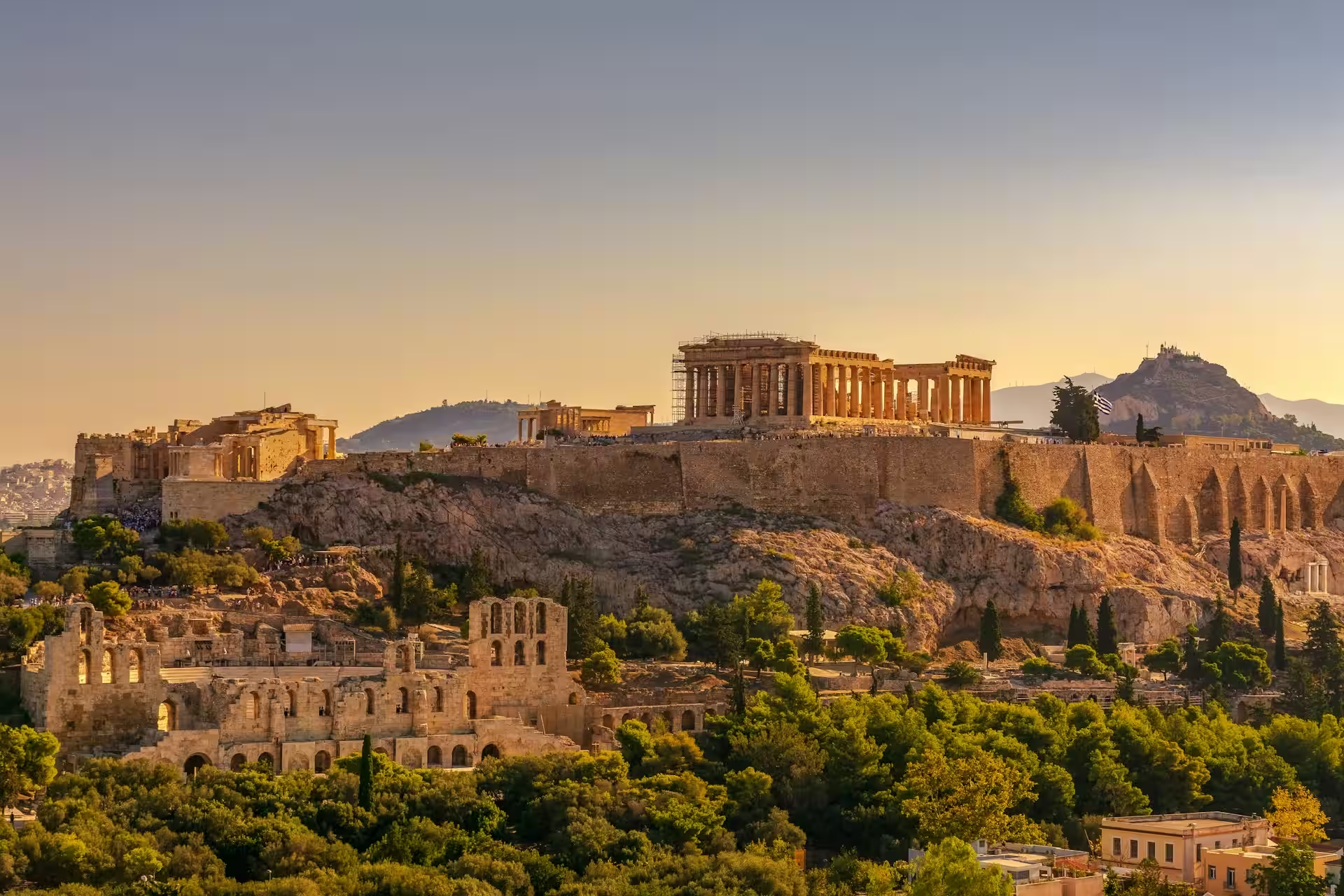
Athens is perfect for a short stay, as long as you accept that you cannot see everything. The historic centre fits within a few kilometers, but the Acropolis is now visited on a booked time slot, and the museums do not all open at the same hours.
Here is a 2- or 3-day itinerary, with prices and booking rules checked in November 2026, so you know what to do, how much to budget, and where to sleep without wasting time on transfers.
How to plan an Athens weekend break of 2 or 3 days without rushing?
Athens is more compact than it looks. The Acropolis, the ancient agora, Plaka, and Monastiraki are a few minutes apart on foot, which lets you build a weekend break in Athens without spending your days on public transport. The real risk is not distance; it is trying to fit in too much.
Two days for the essentials, three to breathe
Two days are enough to see the Acropolis, its museum, Plaka, the ancient agora, and one great viewpoint. The third day adds what takes more time, such as the National Archaeological Museum or half a day by the sea. Always group your visits by neighborhood, and book the Acropolis in advance, as its time slot is compulsory.
When should I go for a weekend break in Athens?
Spring and early autumn offer the best compromise, especially from mid-April to late May and from mid-September to early October. In summer, average highs reach about 33 °C in July and 34 °C in August, and the Acropolis may close temporarily in extreme heat.
Winter is still pleasant for sightseeing, with highs around 13°C in January, but the site closes earlier, at 5 pm from November to March.
What should you do on the first day of an Athens weekend break?
The first day is devoted to ancient Athens. It starts with the climb up the Acropolis rock and ends in the lanes of the center, then on a hill facing the monument.
The Acropolis, the Parthenon, and a booked time slot
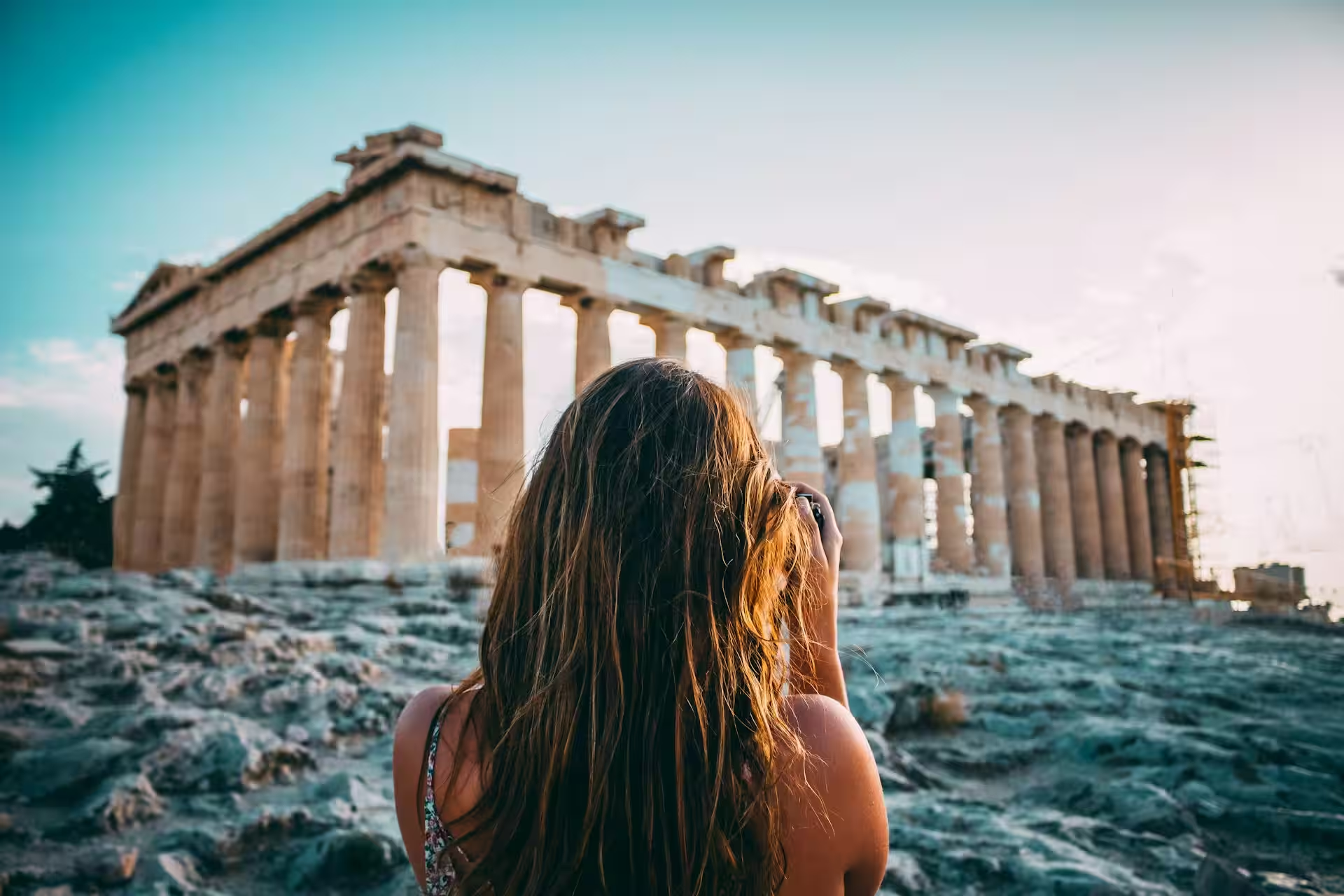
The Acropolis is the logical starting point of an Athens weekend break. The full-price ticket costs €30, gives access to the Parthenon, the Erechtheion, the Propylaea, and the Theatre of Dionysus, and requires you to choose a time slot when you buy it.
The official ticket office at hticket.gr is the channel to use.
Aim for the first slot of the morning, when heat and crowds are lowest, and arrive a little early to clear security. On-site, the Erechtheion is recognizable by its Caryatid porch, which now holds copies.
The Acropolis Museum, Plaka, Anafiotika, and sunset
At the foot of the rock, the Acropolis Museum is the natural next stop. The full price is €20, and the ticket is bought separately. The five original Caryatids are displayed there, and the Parthenon Gallery on the top floor shows friezes, metopes, and pediments facing the monument.
On Fridays the museum stays open until 10 pm, which makes for a very good evening plan.
In the afternoon, lose yourself in Plaka, with its cobbled lanes, neoclassical houses, and tavernas. Climbing towards Anafiotika, you find a small neighborhood of white houses and narrow stairs that recalls the Cyclades.
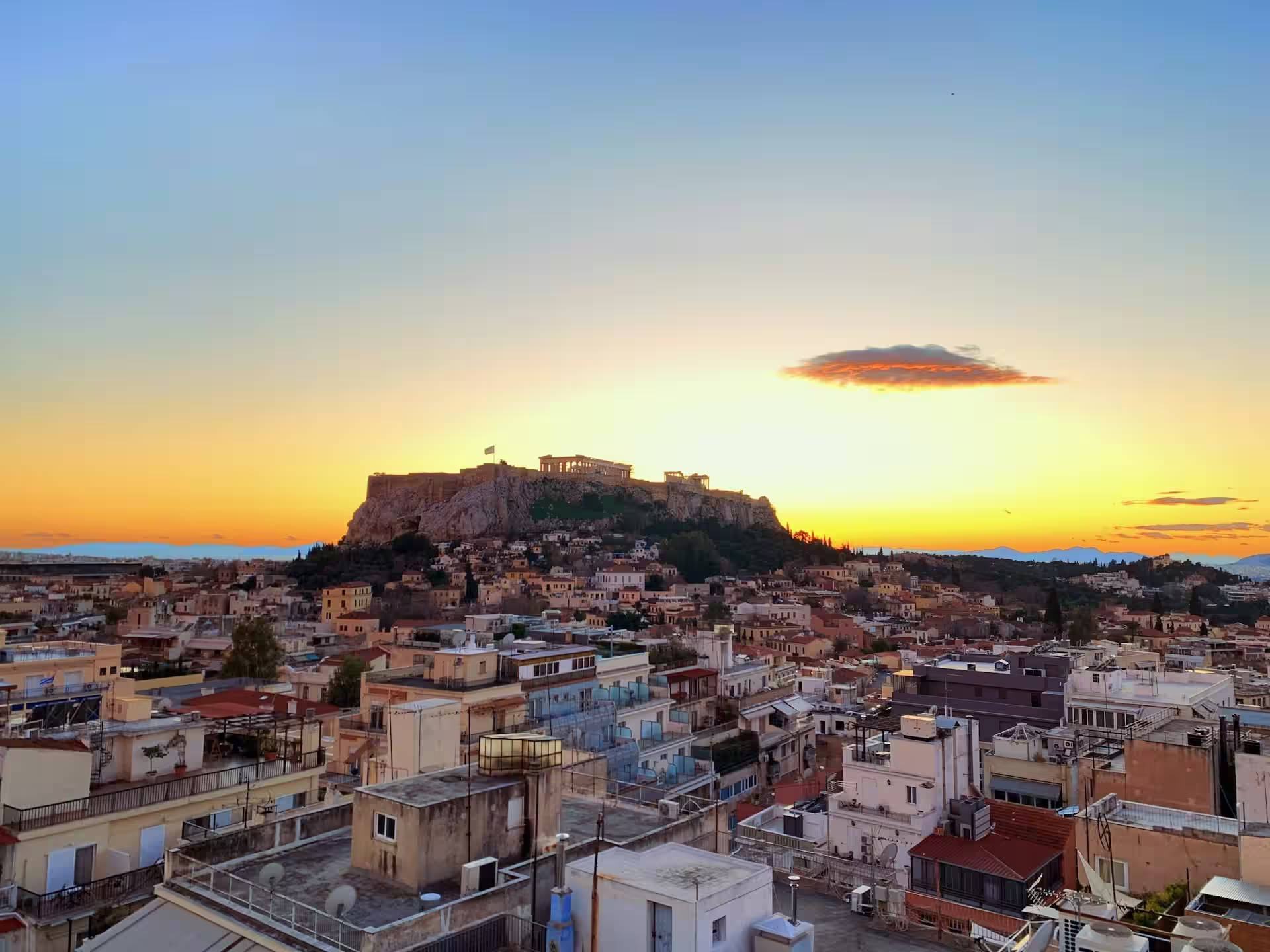
To finish, climb Philopappos Hill, free to enter, one of the best viewpoints over the Acropolis at sunset. Arrive 30 to 40 minutes before sunset to find a spot.
What to see on day two of an Athens weekend break, between the agora and lively neighborhoods?
After ancient Athens, the second day shows the city at an everyday pace, with its markets, terraces, and panoramas.
The ancient agora and Monastiraki in the morning
Start with the ancient agora, which was the political, commercial, and social center of the city. The Temple of Hephaestus is remarkably well preserved, and the Stoa of Attalos now houses a museum.
Then head to Monastiraki, whose square and flea market are ideal for hunting souvenirs or simply watching the street go by.
Psirri, Mount Lycabettus, and a meze dinner
A few minutes away, Psirri is a former craftsmen's district turned into a hub of cafés, galleries, bars, and street art. It is the place for lunch in a taverna with souvlaki, tzatziki, stuffed vine leaves, or moussaka.
Late in the afternoon, gain height on Mount Lycabettus, which rises to 277 meters. You can walk up or take the funicular from Kolonaki, a ride of about three minutes. In the evening, return to Psirri, Koukaki or Plaka and order several mezes to share, with a local wine.
How to extend a long Athens weekend break with a third day?
If you have one more day, three options are open to you depending on your tastes: between stones, local neighborhoods, and the seaside.
Syntagma, the changing of the guard, and the Panathenaic Stadium
Syntagma Square is a landmark of the center. In front of Parliament, the Evzones stand guard at the Tomb of the Unknown Soldier, with a changing of the guard every hour. The grand ceremony takes place on Sundays at 11 am, with the whole guard and a band, which is a good reason to plan your Sunday morning around it.
Nearby, the National Garden offers a green break, and the Panathenaic Stadium, built entirely of marble, hosted the first modern Olympic Games in 1896.
The National Archaeological Museum, local neighborhoods, or the coast
The National Archaeological Museum is one of the most important collections of Greek antiquities in the world. The full price is €20 in high season, and the museum only opens at 1 pm on Tuesdays, so avoid that morning.
For a different mood, head to Koukaki, Pangrati, or Exarchia. And if the weather allows, the Athenian Riviera, with Glyfada and Vouliagmeni, lets you swim, provided you accept a longer journey. A day on an island in the Saronic Gulf such as Agistri remains possible, but it means leaving early.
What budget should you plan for an Athens weekend break?
The budget of an Athens weekend break depends mostly on accommodation and meals, but sightseeing and transport are easy to estimate.
How much do the Acropolis, the museums, and the transport cost?
The three major sites, the Acropolis, the Acropolis Museum, and the National Archaeological Museum, come to about €70 per person at full price in high season, that is, €30 plus €20 plus €20. Reduced fares and free entry exist depending on age and nationality, to be checked at each ticket office.
For transport, a 90-minute ticket at €1.20 is valid on the metro, bus, and tram, and a 24-hour pass costs €4.10. These tickets are not valid for the airport, which has its own fares.
How to get to the center from the airport?
Metro line 3 links the airport directly to Syntagma in about 40 minutes, then to Monastiraki a few minutes later, with a train every 30 to 36 minutes. Expect €9 to €10 for a single ticket; a fare is to be confirmed on the Athens tourism office website.
The X95 express bus reaches Syntagma in about an hour. The taxi, at a flat fare of €40 by day and €55 at night, is the simplest option if you arrive late or with luggage.
Where to stay for a successful Athens weekend break?
When you only have a few days, every journey saved is one more visit. Sleeping in the historic center lets you do everything on foot and go back to rest between visits.
Which neighborhoods to choose to stay in Athens?
Plaka charms with its historic feel and its closeness to the Acropolis.
Monastiraki is handy for the metro, shops, and restaurants.
Psirri is lively, central, and very pleasant in the evening, while
Koukaki suits those who prefer a residential setting while staying close to the monuments.
Syntagma, finally, is ideal for transport connections.
For a first stay, Psirri and Monastiraki offer the best compromise between location, atmosphere, and ease of getting around.
Why stay in Psirri, close to the agora and Monastiraki?
The Residence Christokopidou Hotel & Spa is on Christokopidou Street in Psirri, about 200 meters from the Monastiraki metro, which is served directly from the airport. The ancient agora is a few minutes away on foot, and the Acropolis about ten minutes.
The hotel has a spa with a heated indoor pool and sauna, as well as treatments and massages by appointment, a welcome change after a day of walking. A rooftop terrace overlooks the Acropolis. Among the rooms and suites, the suite with terrace offers 30 m² plus a private 15 m² terrace and sleeps up to 4 people.
Residence Christokopidou